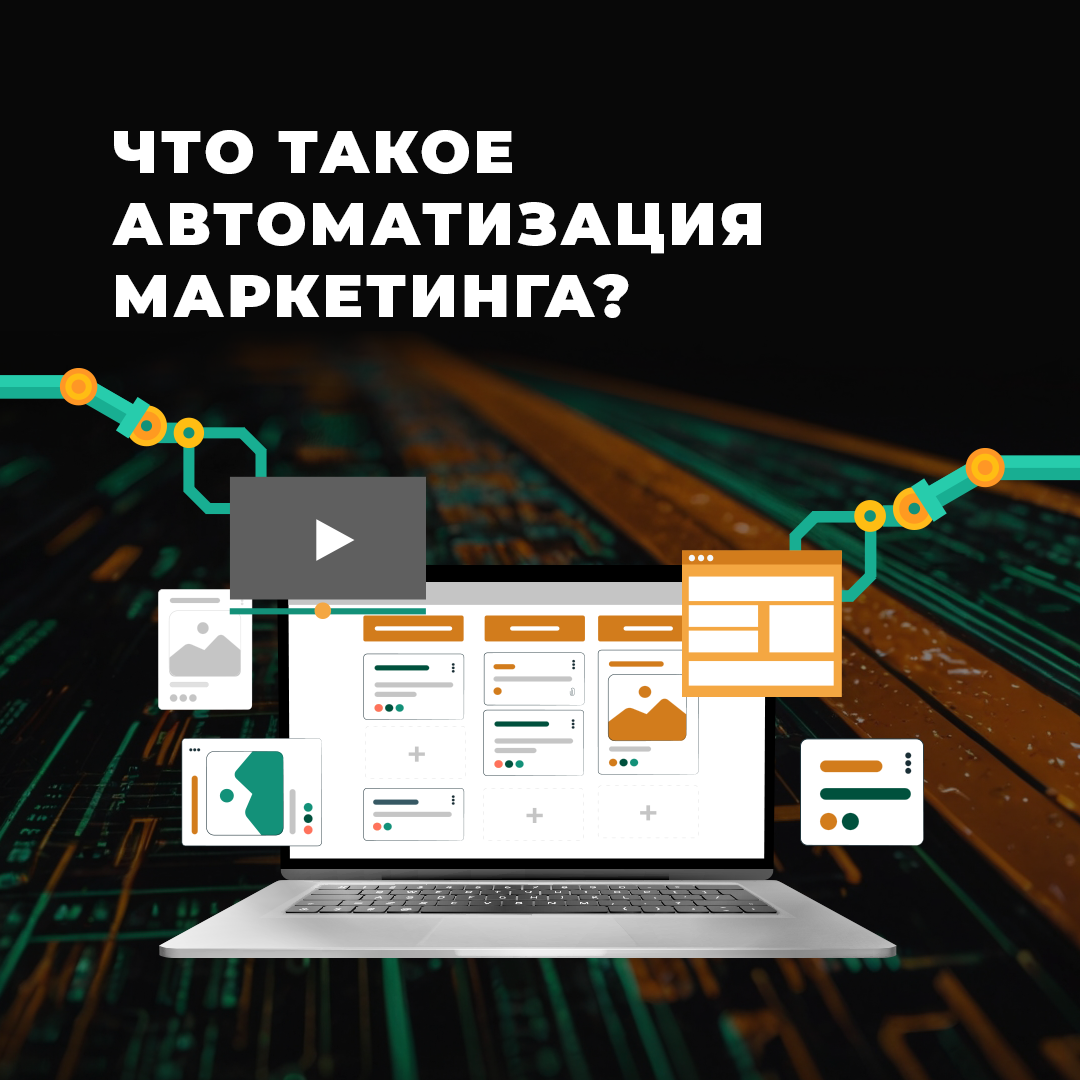
Marketing automation is not just a fashion trend, but a real saviour for businesses. Imagine that you have an invisible assistant who 24/7 handles mailings, collects leads, analyses customer behaviour and even launches advertising campaigns. At the same time, he doesn't ask for a salary, he doesn't go on holiday or get sick. Beautiful, isn't it?
In simple words, marketing automation is the use of special tools and technologies that allow you to perform routine marketing tasks without human involvement. This saves time, reduces costs and increases efficiency. Plus, with automated processes, it's easy to scale marketing efforts without the need to add more staff. While it used to take several specialists to launch an advertising campaign, now it can literally be done in a couple of clicks.
Top 5 marketing automation tools
In the marketing world, there are many services and platforms that make life easier for marketers. Here are five of the best tools:
- HubSpot - A powerful marketing automation platform including CRM, email newsletters, analytics and lead generation. Suitable for both small and large businesses. It features an intuitive interface and extensive customisation options.
- Marketo - is a professional solution for large companies, allowing them to automate personalised marketing campaigns. Provides deep analysis of user data and integration with various services.
- ActiveCampaign - A great solution for small and medium-sized businesses that combines email marketing, chatbots and CRM. Allows you to easily segment your audience and trigger automated message sequences.
- Sendinblue - a service that allows you to automate email and SMS mailings, as well as work with chats and audience segmentation. An excellent choice for companies oriented towards omnichannel customer interaction strategies.
- Zapier - a tool that connects different applications and services to automate processes without programming. It allows you to connect over 3,000 different services, creating convenient workflows without human intervention.
These tools not only save time, but also significantly improve customer interaction. Automation eliminates the human factor in routine tasks, thereby minimising possible errors and inaccuracies in marketing processes.
How does automation affect sales?
Marketing automation has a direct impact on increasing sales. How. Let's break down the main points:
- Time saving. Marketers can focus on strategic tasks rather than routine work. This allows the company to adapt faster to market changes and respond quickly to customer needs.
- Personalisation. The tools automatically analyse user behaviour and offer them exactly what they are looking for. This significantly increases the chances of a successful sale, as customers receive the most relevant offers possible.
- Quick response. Chatbots and autoresponders interact instantly with customers without letting them "cool off". This is especially important in competitive niches where response time can play a decisive role in customer choice.
- Increased conversion. Properly set up automated mailings warm up the audience and bring them to the point of purchase. And with the help of A/B-testing, campaigns can be constantly optimised, increasing their effectiveness.
- Budget optimisation. Through automation, marketing costs can be reduced by eliminating ineffective advertising campaigns and reallocating budget to more successful promotional channels.
Examples of successful implementation
To avoid being unsubstantiated, here are some real-life cases of successful use of marketing automation.
- Amazon - the e-commerce giant uses personalised recommendations, automated mailings and retargeting to drive sales. Their machine learning algorithms analyse user preferences and suggest products that are most likely to interest the customer.
- Netflix - analyses users' preferences and suggests content they are most likely to watch. This allows the company to retain subscribers and increase their time on the platform.
- Nike - uses automated email campaigns to retain customers and encourage repeat purchases. The brand also actively uses gamification in its mailings, which increases subscriber engagement.
- Airbnb - uses automatic trigger emails that remind users of incomplete bookings. Thanks to this service, the company reduces the number of incomplete transactions and increases the number of successful bookings.
As you can see, marketing automation is a powerful tool that helps businesses grow and develop. It doesn't matter whether your business is small or a huge corporation, implementing such solutions will allow you to save time, improve customer experience and, of course, increase profits. In today's world, where competition is growing rapidly, automation is becoming not just an advantage, but a necessity. So, if you haven't started using these technologies yet, it's time to start thinking about implementing automated processes in your marketing efforts today!
Discover more from Web студия Kakadoo
Subscribe to get the latest posts sent to your email.