
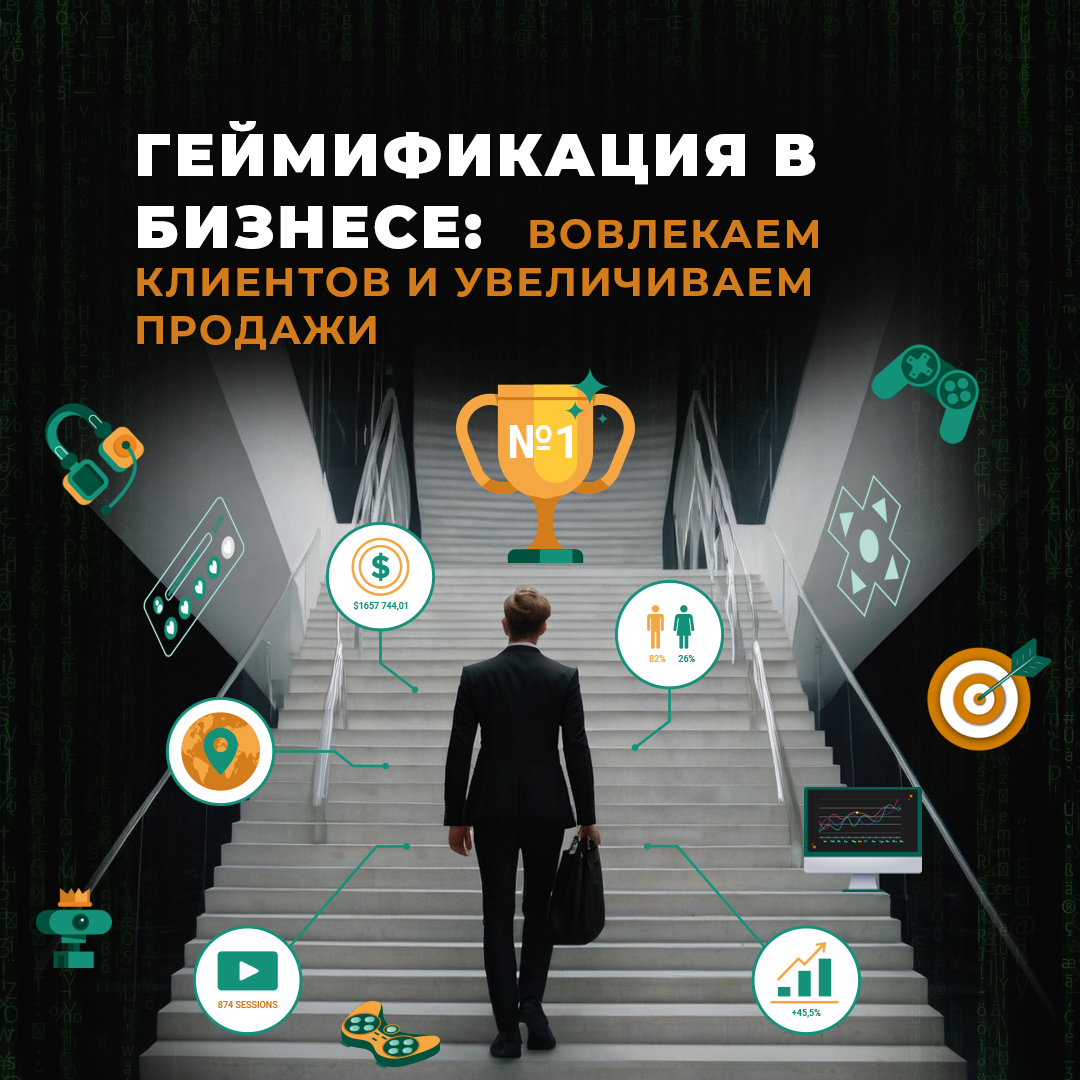
Modern businesses are constantly looking for new ways to attract and retain customers. In a highly competitive environment, traditional marketing methods no longer work. People are tired of the same type of advertising and demand interactive interaction with the brand. That's why more and more companies are implementing game mechanics, turning interaction with customers into an exciting process. Gamification is not just a trend, but a powerful tool that helps increase engagement, loyalty and, of course, sales. Let's find out how it works and how to apply it in your business without excessive costs.
How game mechanics work in marketing
Gamification is based on the use of game elements in non-game processes. The goal is to make interaction with the brand more engaging and motivating. Here are the main mechanics that have been successfully applied in marketing:
- Scores and levels. Customers receive bonus points for purchases, reviews, newsletter subscription and other activities. The more activity - the higher the level and more privileges. This creates a sense of progress and encourages users to interact with the brand more often.
- Achievements and awards. Badges, trophies and other virtual rewards incentivise users to perform targeted actions and progress further. People like to feel special, and rewards make the process more emotionally fulfilling.
- Competitions and Challenges. People love to compete! Various contests, rankings and challenges motivate customers to interact with the brand more actively. The higher the excitement, the higher the likelihood of repeat purchases and engagement.
- Collecting. Mechanics for collecting "items" (e.g. stickers, stickers, virtual cards) are hugely successful. They create additional value and create a desire to complete the process. Many well-known brands use this strategy in their loyalty programmes.
- Elements of randomness. Roulettes, "lucky tickets" and mini-games with a chance to win a prize increase engagement by creating a gambling effect. Such mechanics are often used in e-commerce and mobile applications.
- Personalisation and storytelling. The opportunity to influence the development of the story, personalised bonuses and unique scenarios make the interaction with the brand more emotional. Customers feel that the brand understands their needs and offers a personalised experience.
Using such mechanics in marketing helps to create an emotional attachment with customers, hence increasing customer engagement and increasing the average cheque.
Examples of brands that are using gamification
Gamification has already proven its effectiveness, and large companies are actively using it in their strategies. Here are some vivid examples:
- McDonald's - Monopoly. The system of collecting stickers with the opportunity to win prizes brings millions of customers to the chain's restaurants every year. Every year this campaign becomes more and more popular, causing excitement among customers.
- Nike - Nike Run Club. The app turns jogging into a competitive process, motivating users to reach new sporting goals. Users compete with each other, share results and motivate themselves to achieve new achievements.
- Duolingo. Language learning is turned into a game: scores, levels, contests and rewards make learning fun. Every day, millions of users log in to the app to keep up a "streak" of successful lessons.
- Starbucks is a loyalty programme. Customers receive "stars" for purchases, which can be exchanged for drinks and privileges. This creates an engagement effect and makes customers loyal.
These examples show that game mechanics can work successfully in a wide variety of fields, from the restaurant business to online education.
How to introduce gaming elements into your business without excessive costs
Many entrepreneurs believe that gamification is expensive and complicated. However, there are affordable ways of introducing game elements without large investments:
- Simple Social Media Challenges. Launch a contest or flash mob where users perform tasks and get prizes. This creates a viral effect and attracts new customers.
- Gamified loyalty programme. Create a system of points and levels for customers - this can be implemented even through simple CRM systems. Such a system does not require a large investment, but it can significantly increase repeat purchases.
- Interactive quizzes and tests. People love to test themselves! Create a quiz related to your product and offer a prize for completing it. This can be a great way to collect customer contact information.
- The mechanics of collecting and collating. For example, invite customers to collect stickers, coupons or promo codes to receive bonuses. This will create engagement and increase loyalty.
- Elements of randomness. Add a wheel of fortune to your online shop that hands out discounts or gifts for signing up. People love unexpected bonuses, and this mechanic can increase conversion rates.
- Personalised awards. Congratulate customers on holidays and give bonuses for activity. This shows attention to the customer and strengthens the emotional connection to the brand.
Gamification is a powerful tool that helps engage customers, increase sales and strengthen a brand. It makes interaction with the business fun and the customer experience unforgettable. The main thing is to implement game mechanics in a meaningful way, taking into account the interests of the audience and the peculiarities of the business.
Start with simple solutions, test different formats and watch your audience's reaction. If done correctly, gamification will become not just a marketing tool, but a real engagement strategy that will bring you profits and build customer loyalty. After all, when a customer is engaged, he becomes not just a customer, but a fan of your brand!
Discover more from Web студия Kakadoo
Subscribe to get the latest posts sent to your email.



 Russian
 Ukrainian
 German
 English