
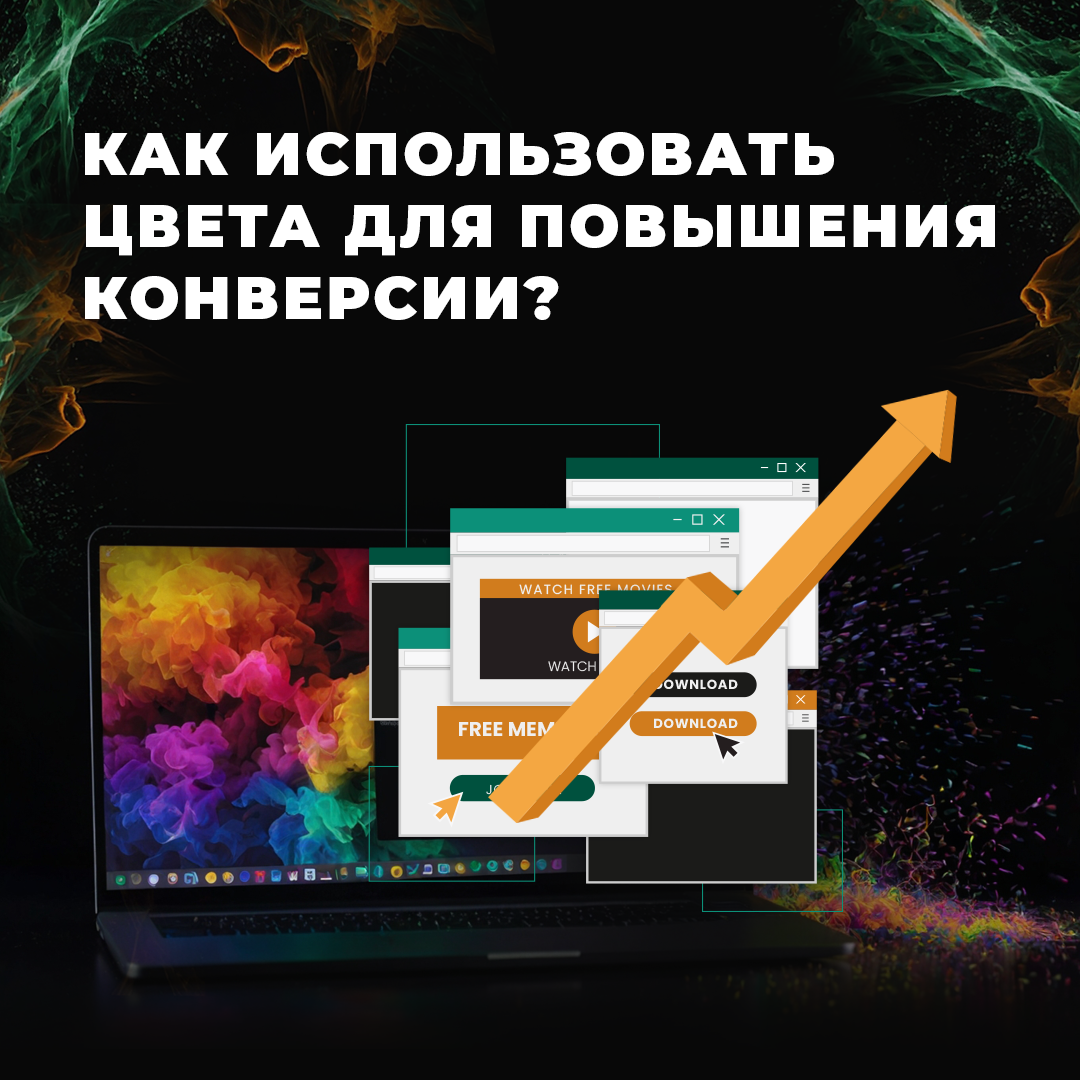
Colour is not just a visual element, but a powerful tool that influences user behaviour. Imagine: you go to a website and everything is in acid green shades with bright red buttons. Do you feel the tension? Maybe you want to close the tab as soon as possible. Now imagine soft pastel shades with contrasting but harmonious accents. It's a completely different feeling, right?
Colour influences perception, emotions and even decision making. In marketing and web design, this has long been no secret, but a true art!
Interesting facts about the influence of colour:
- Before 90%, opinions about a product are formed by the colour.
- Red increases appetiteThat's why fast food companies (McDonald's, KFC, Burger King) love it.
- Blue inspires confidenceThis is why it is chosen by banks (PayPal, Visa, Facebook).
- Yellow and orange encourage spontaneous purchasesIt's not without reason that they are often used in promotional banners.
- Black is associated with the premium segmentIt is loved by luxury brands (Chanel, Gucci, Apple).
- Purple is associated with creativity and innovationThis is why it is often used in creative industries (Twitch, Yahoo).
- Green is relaxing and associated with ecologyIt is often chosen by health-oriented brands (Whole Foods, Starbucks).
So if you want a visitor to stay on the site longer or take a targeted action - use colour wisely!
Colours for different types of businesses:
Every business has an audience and the audience has expectations. The choice of colour should be in line with the brand message and business area. Let's get to the bottom of it!
- Finance and technology → blue, blue, white (trust, stability, security).
- Fashion and luxury → black, gold, dark grey (elegance, premium, status).
- Health and environment → green, white, blue (naturalness, harmony, freshness).
- Baby products → bright shades, yellow, pink, blue (joy, friendliness, comfort).
- Foodstuffs → red, yellow, orange (energy, appetite, movement).
- Cars and machinery → metallic shades, blue, red (reliability, speed, power).
Choosing the right colour can not only attract attention, but also increase conversions. For example, if you have an online shop of children's goods, decorated in black and white shades, customers may feel the "wrong mood". And if a luxury cosmetics shop is splashed with acidic colours, the audience simply won't take it seriously.
Examples of successful solutions:
Sometimes the best examples can be found right around us. Let's take a look at how colours work in real brands:
- Facebook → blue. Reliability, professionalism, peace of mind. Ideal for a social network where users spend a lot of time.
- Coca-Cola → red. Energy, passion, desire to buy a jar right now.
- IKEA → yellow and blue. Yellow attracts attention and encourages purchases, while blue inspires trust.
- Starbucks → green. Natural, cosy, relaxing. Do you want coffee? Of course I do!
- Tesla → black and red. Style, innovation, power, confidence.
Colours don't just adorn brands - they shape emotions and attract the right audience.
The psychology of colour in commerce.
In eCommerce, every element should work for conversion, and colour is no exception. It's important not just to choose a "pretty" palette, but to consider how colour affects users.
How to use colours to boost sales:
- CTA-buttons ("Buy", "Checkout") - red or orange (cause action).
- Site background - Neutral colours so as not to distract from the content.
- Reviews and trust blocks - blue, green (associations with reliability).
- Promotional banners - yellow or red (encourages urgent purchases).
- Logo and corporate identity - The key colours should match the emotion the brand wants to evoke.
Mistakes to avoid:
❌ Excessively bright colours that are irritating to the eye.
❌ Lack of contrast (if the text blends into the background - users will just leave).
❌ Ignoring the target audience (e.g. using 'playful' colours for serious business).
❌ Excessive use of dark shades on e-commerce sites - this can put off shoppers.
Colour in marketing is a powerful tool that can build trust, increase sales and create the right brand perception. The key is to know your audience and use colour psychology correctly. So if you thought website design was just pretty, now you know: it's also a science! 😉
Follow trends, test colour schemes and create websites that not only please the eye, but also sell!
Discover more from Web студия Kakadoo
Subscribe to get the latest posts sent to your email.



 Russian
 Ukrainian
 German
 English